June 3
June 2
Violet Generation: communicating to build unity
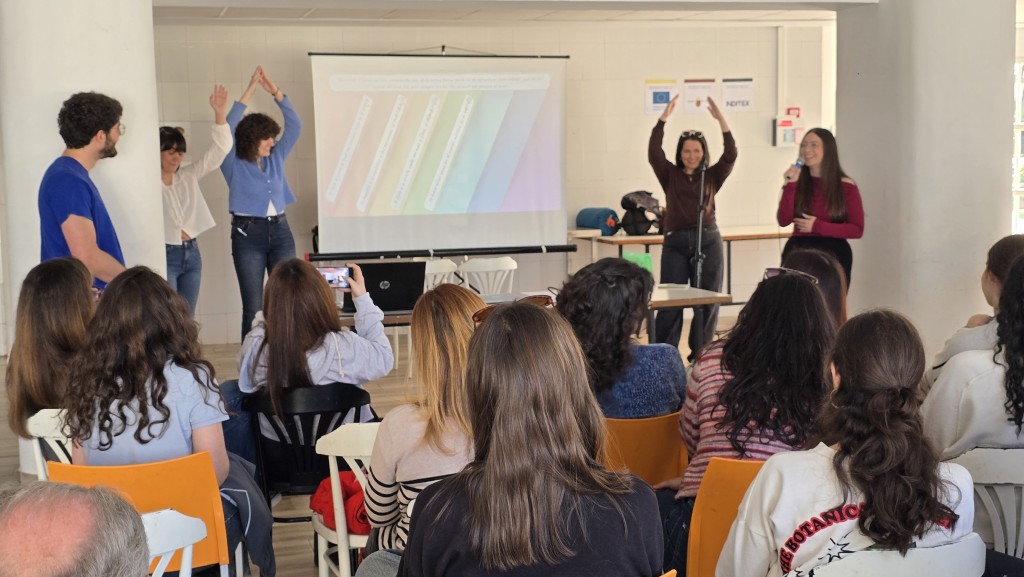
Young people from all over Spain participated in the meeting “San Pedro V – Violet edition”, an experience focused on communication as a path to unity, dialogue and fraternity.
Let us love one another freely, like Jesus
Go and proclaim that the Kingdom of Heaven is near. […] Freely you have received; freely give
Abilities at the service of others
Are we content to live in a world where "the law of the strongest" prevails? Where success requires crushing or subjugating others? Where we look at others with distrust and, for fear of losing what we have, erect physical or invisible barriers? Do we resign ourselves to letting the days slip by without hope, without finding meaning in our lives? And even more: is that truly living fully? In a complex and uncertain world, we have the opportunity to be bearers of a new way of conceiving life. But to do so, we must first experience it. How? We were born, without asking for it, with certain abilities: some have a knack for communication, others possess artistic and creative sensitivity; we all have a certain level of intelligence, and life may have offered us unique opportunities to develop. The question is: what do we do with all of this? We have two options: to use these abilities only for our own benefit, enjoying what they bring us, or to put them at the service of others and share them. Perhaps the second option won't bring us immediate economic benefits—which today seems to be the world's main driving force—but it will undoubtedly allow us to contribute to building a different reality: a world where competition is not an end in itself, but a means to improve and grow together. This isn't an imposed reality, but a process that begins in everyday relationships and in the decisions each of us makes when we choose to act. People who live this way demonstrate, through their actions, that change is possible. Wherever they act, they make a new paradigm visible and show that this change is near. With humility, let us share who we are and what we have; let us accompany and offer affection to those who need our warmth and closeness, alleviating suffering when necessary; let us live together the values that drive change for a society based on justice, respect, peace, and the dignity of all people; a society where forgiveness and reconciliation are promoted and the common good is sought. Together we will have greater strength and credibility, especially if we persevere in our choices. Let our actions not seek recognition, nor be based on calculation or self-interest. Transformation is slow, sometimes imperceptible, but if we are consistent, change occurs, grows, and takes hold. The future begins to unfold.
Word of life
In this chapter of Matthew's Gospel, the apostles have just been chosen by Jesus, who calls them by name and gives them special powers over unclean spirits to cast them out, and the gift of healing every sickness and disability. Jesus instructs them on where and how to carry out their initial mission. The message they are to proclaim is clear: «The Kingdom of Heaven is at hand» (Mt 10:7). The instruction to «go and proclaim» the entrusted message underscores, on the one hand, that the true disciple is first and foremost a preacher of closeness, and on the other, that their way of walking together must be a proclamation. In fact, in the Gospel of John, after giving them the new commandment, Jesus affirms: «By this everyone will know that you are my disciples, if you love one another» (Jn 13:35). «Go and proclaim that the Kingdom of Heaven is at hand. […] Freely you have received; freely give.» The «Kingdom of Heaven» is the core of Jesus« message. The related expression »Kingdom of God« was used in the Old Testament to indicate God’s dominion, rule, and salvific action in human history. He is sovereign of the world and especially of the people of Israel, who awaited a descendant of King David to restore Israel’s mission among the nations. In the New Testament, Jesus himself is presented as a descendant of David and therefore king. Unlike a temporal kingdom, the »Kingdom of Heaven« is a kingdom of peace and justice, where the poor are cared for, where forgiveness and reconciliation prevail, and which will bring life and light to all nations. It is a kingdom that has already begun in the world and in people’s hearts, but which will be fully realized when Jesus returns. »Go and proclaim that the Kingdom of Heaven is near. […] Freely you have received; freely give.« Jesus announces that the Kingdom is near in time; it is imminent. Through his parables, such as the parable of the mustard seed or the parable of the yeast that makes the whole batch of dough rise, we understand that he acts in a mysterious and humble yet persistent way, even over time. »Near« also has a spatial meaning. When the disciples, who carry the presence of Jesus» spirit, approach on foot, the Kingdom of God draws near. And when, in the Gospel of Mark, Jesus tells the scribe, «You are not far from the Kingdom of God» (Mark 12:34), it is likely that he meant not only «You have begun to understand,» but also «You are not far from me.» «Go and proclaim that the Kingdom of Heaven is near. […] Freely you have received; freely give.» “Freely” translates a term that in the original Greek means “as a gift.” This underscores that everything the apostles have received was not given to them because they deserve it. The source is God’s generosity and the fact that they were chosen for a specific mission. Chiara Lubich writes: “The Kingdom of God must be welcomed. It is a gift that God gives you. In fact, no human effort, ascetic attempt, study, or intellectual investigation can help you enter the Kingdom of God. It is God himself who comes to meet you, who reveals himself with his light or touches you with his grace. And there is no merit of which you can boast or on which you can rely to have a right to such a gift from God. The Kingdom is offered to you freely.”[1] By welcoming it, we too are called today to continue the task that Jesus entrusted to the apostles: to proclaim, in word and deed, the nearness of the Kingdom, to announce together to every human being a message of hope: in this afflicted and uncertain world, God loves you immensely and loves us all immensely. Augusto Parody Reyes and the Word of Life team [1] C. Lubich, Word of Life, October 1979: in Ead., Words of Life/1 (1943-1990) (ed. F. Ciardi), Ciudad Nueva, Madrid 2020, p. 155.
June 1st
Conflict and religion: beyond confrontation
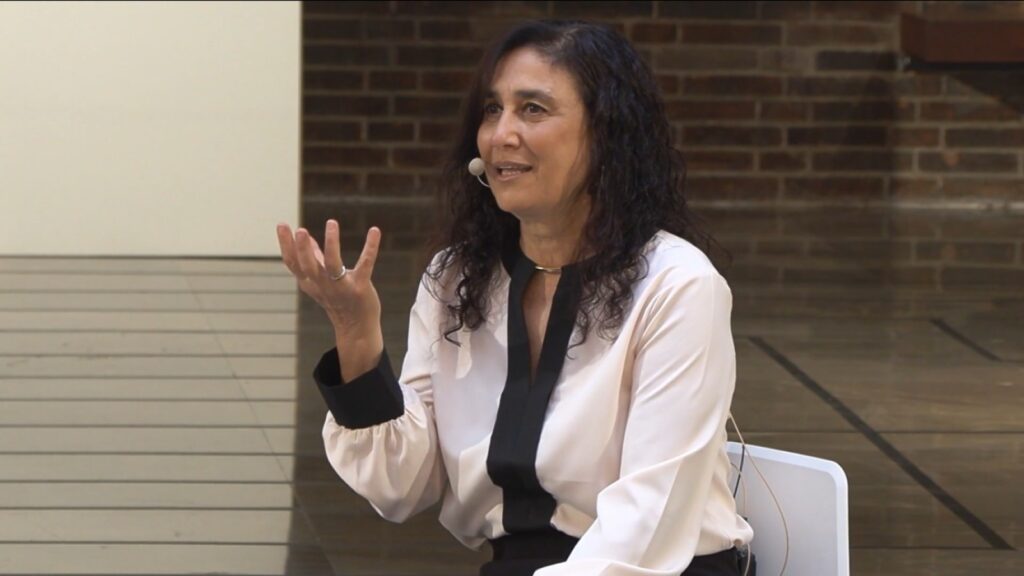
Colloquium in Madrid with the Argentinian rabbi Silvina Chemen. A living testimony that invites us to build bridges and discover hope through the dialogue of life.