Beyond being viewed as abstract speculation, Trinitarian Ontology seeks to contribute to addressing contemporary challenges such as social fragmentation, the crisis of meaning, and interreligious dialogue. This emerging discipline proposes that "Being" is not solitary, but essentially relational, Trinitarian love, offering a new framework for understanding philosophy, theology, and everyday life.
Trinitarian Ontology is framed within the intuition of Chiara Lubich and has been academically developed by theologians and philosophers such as Piero Coda and Klaus Hemmerle, who gave it its definitive and identity-forming impetus in 1976, explicitly introducing the formula in thesis number 9 of his writing to outline the birth of a "new thought".
The key lies in overcoming the static view of God and humanity. If God is Trinity—eternal relationship—then all of created reality bears the mark of relationality.
A novel aspect of this discipline is that it is neither solely theology—the study of God—nor solely philosophy—the study of being—but a «third space» where both mutually enrich each other. The title of one of the seminars held in Spain illustrates this very well: «Trinitarian Love Enriches Philosophy and Theology.».
In our country, five seminars organized by the publishing house Ciudad Nueva have already been held with the participation of various Spanish and Latin American experts, as well as some professors from the Sophia University Institute of Loppiano, in Italy.
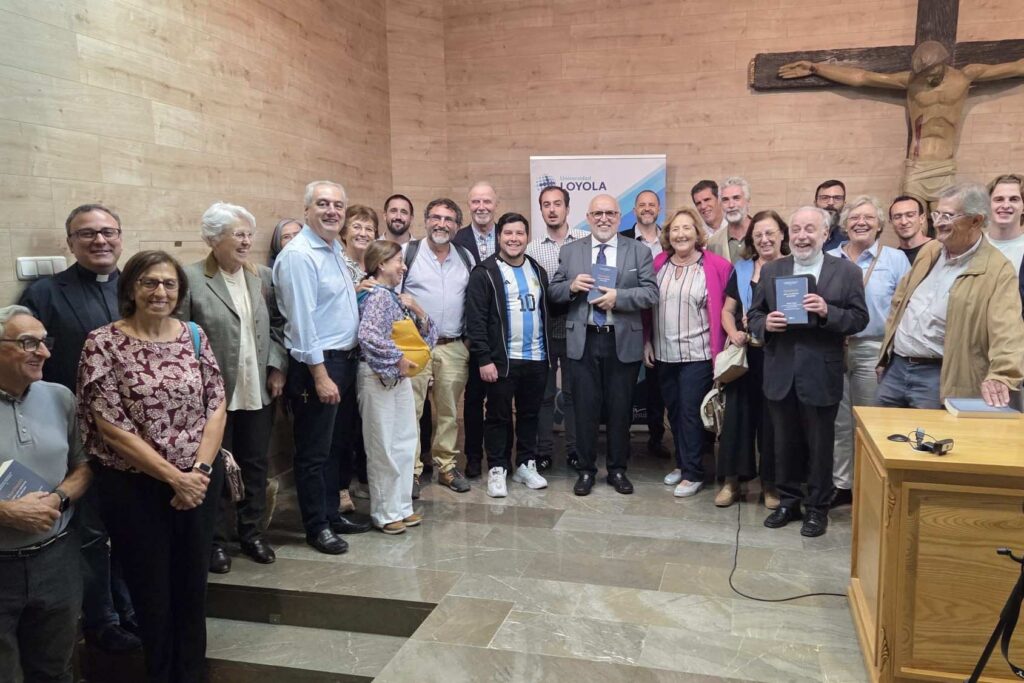
The last seminar was held in Granada last October and was hosted by the Focolare Movement community in that city, which also collaborated in the presentation of the first volume of the Dynamic Dictionary of Trinitarian Ontology. As one of the organizers stated, "it was a moment of community, of family, a privileged place to put these Trinitarian relationships into practice.".
Indeed, Trinitarian Ontology is learned by practicing it in a place, in a classroom of study and research, which is a laboratory of thought, as well as a training ground for life and love.
In other words, a workshop in which each and every one is an actor and protagonist; responsible for each other on their own path, reciprocally.